You sell the ring at four. The website can't still be selling it at five.
Most stores have plenty of every product. You have one. That single fact is why a jewelry storefront can't be a nightly copy of your stock, and why this one reads the same product record your counter does, in the same second.
A sync job that runs every fifteen minutes is fifteen minutes of double-selling.
Bolt a general ecommerce platform onto your stock and you get two databases that agree most of the time. For a shop with forty of a t-shirt, most of the time is fine. For a shop with one of a ring, the gap between them is the exact window where the same piece gets sold twice: once at the counter, once online, and someone gets an apology email and a refund.
Then gold moves and the website is quoting last week's price on a piece you'd now charge more for. The problem isn't the sync. It's having something to sync.
The product page is a view of the product, not a copy of it.
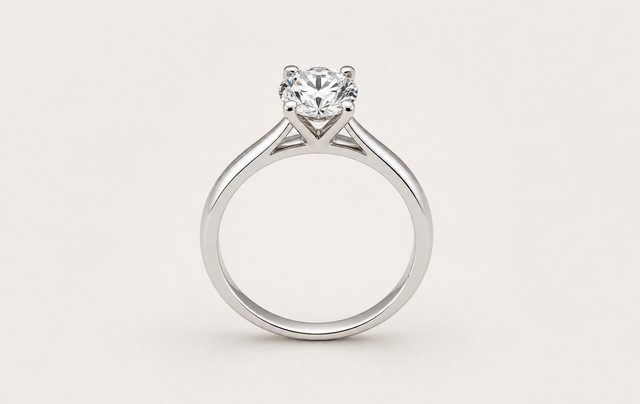
Everything a shopper needs is already on the piece: the photos you shot when it came in, the description, the metal and stone details, the price, the certificate. Publishing is deciding which of those the public sees, not typing them a second time.
New stock lands on the site as soon as you mark it publishable. No second listing step, no waiting for an overnight run.
Change a price in Gem Logic, or let metal price sync change it for you, and the storefront is quoting the new one immediately.
An online order takes the piece off the shop floor. A counter sale takes it off the website. Neither one needs to know about the other.
It should look like your shopfront, not like a platform.
A logo, an accent colour, a headline typeface and your own navigation, set once, applied everywhere. Add the pages a jeweler actually needs: your story, bespoke commissions, repairs, opening hours for the two shops.
Want it done for you? Our e-commerce build service designs the whole storefront around your brand.
An online order is just a sale that happened without you.
Customers browse, save favourites to a wishlist, and pay through Stripe. What arrives on your side isn't a notification to act on, it's a sale, in the same list as everything sold over the counter, with the customer already in your CRM.

 Sales · todayAll channels
A shopper saving three rings and returning twice is a lead. It's visible on the contact, not stuck in an analytics dashboard.
Nothing to log into each morning to check whether an order came in overnight. It's already in the sales list.
One piece, described properly in every language you sell in.
Not translated menus over English product copy. The descriptions themselves live in each language on the piece, so a Dutch customer reads Dutch and a French one reads French, and both versions are indexed.
Tijdloze elegantie in 18k geelgoud, met GIA-certificaat.
Élégance intemporelle en or jaune 18 carats, certificat GIA.
Timeless elegance in 18k yellow gold, GIA certified.
Three storefronts. Three completely different businesses.
A family store in Leuven, a 150-year-old multi-brand house in Liège, and a buy-and-sell specialist in Nice. Same stock system underneath, and none of them looks like it.

A family store that had been selling in one room since 1990. They moved their operations onto Gem Logic first; the storefront came afterwards, and it came fast, because the products and photos were already sitting there.
Their site carries the full collection with their own branding, and reads in the three languages their customers actually walk in speaking.
Having our website integrated directly with Gem Logic means we never worry about inventory mismatches. When a product sells online, it's immediately reflected in our store system.


A multi-brand house carrying Pomellato, Vhernier, Pasquale Bruni and ten others alongside its own atelier creations, plus a pre-owned floor where every single piece is genuinely one of one.
Brand pages, category filters, wishlists and a French storefront, all reading the same stock as the counter on Rue des Dominicains.

Their stock is almost entirely second-hand signed pieces, each expertised and restored in the Nice atelier. Nothing repeats, which is the hardest possible case for a storefront, and the reason it can't be a synced copy.
The site also runs the buy side: gold purchase and valuation enquiries arrive as contacts, not as inbox mail.
A storefront is one way out of the same stock.
How long after a counter sale does your website find out?
Book a demo and we'll sell a piece in front of you, then refresh the storefront. It's a short demo.