Six weeks in, the client rings to ask how it's coming along.
Whoever picks up should be able to answer without walking to the workshop. A bespoke piece is a promise with a date, a deposit, and often the customer's own gold attached. Gem Logic keeps all of it on one record, from the first sketch to the certificate.
It's the only thing you sell that doesn't exist yet.
Stock has a shelf, a photo and a price. A commission has none of that on day one, so it ends up living wherever there was room. The brief in an email thread. The costing on a paper form pinned above the bench. The wax photos on the goldsmith's phone. The deposit as a line in the till and a note in someone's memory.
Nothing is lost, exactly. It's just that no single person can see the whole project. And the customer only ever asks one of you.
The quote is already the first version of the piece.
You priced it, listed the stones, attached the sketch. When the customer accepts, that shouldn't become a retyping job. One click turns the quote into a creation, with the same line items, same photos, same customer and full audit trail. From there it moves through your own workshop stages, not someone else's idea of them.
 Creations · workshop12 active
If your bench goes sketch → wax → cast → set → hallmark → polish, name them that. The pipeline is configured, not inherited.
Twelve commissions, four columns, one screen. You can see the bottleneck before the customer feels it.
Every creation carries a deadline, and an automation can nudge you when a stage hasn't moved. Late is a decision, not a surprise.
From the moment they pay a deposit, you're holding something of theirs.
Usually money. Often metal: a mother's chain, a ring from a marriage that ended, brought in to become something else. Both are obligations, and both belong on the creation rather than in a drawer and a memory.
Quoting a piece that will be made in eight weeks means quoting a metal price. Live rates mean the number you give the client reflects the market on the day you give it.
Half of what you're selling is the story of it being made.
Nobody photographs a stock ring being cast. For a commission it's the reason the price makes sense, and the thing the client shows people. Shoot each stage onto the creation as you go and it's all there at the end, next to the certificate.
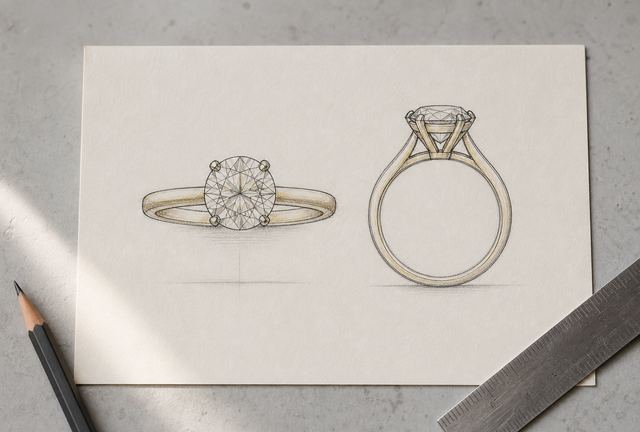
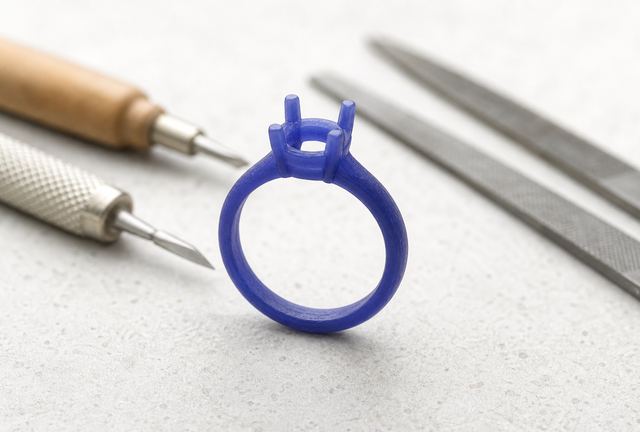
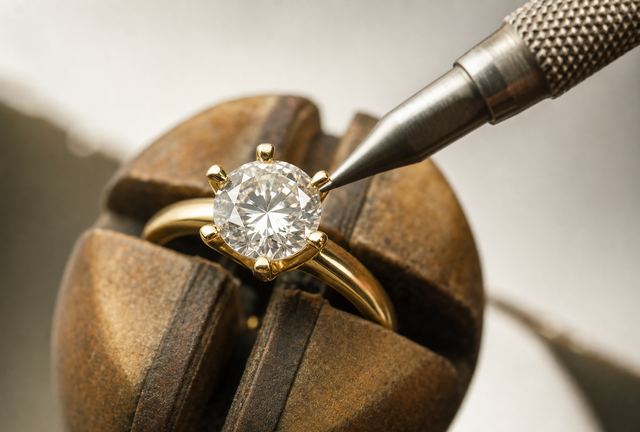
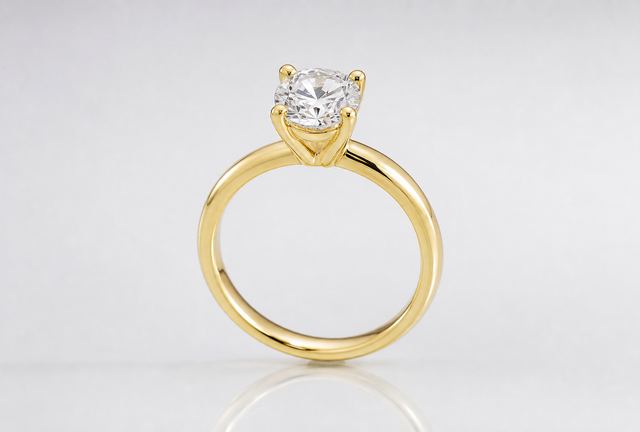
One PDF for the bench and one for the customer, generated from the record. The goldsmith isn't reading your handwriting.
Metal, stones, weights and your own title, all pulled from the creation into a certificate the client keeps with the piece.
Sales, workshop and management leave notes on the creation itself. Why the prongs changed is written down where the next person will look.
Where is the Martin ring right now, and who paid what?
If that takes more than one screen to answer, bring your next commission into Gem Logic and see the difference on the first phone call.